Spain
Spain's highest peak, a still-active volcano towering over an archipelago born of fire, then one of the purest skies in the world
Spain
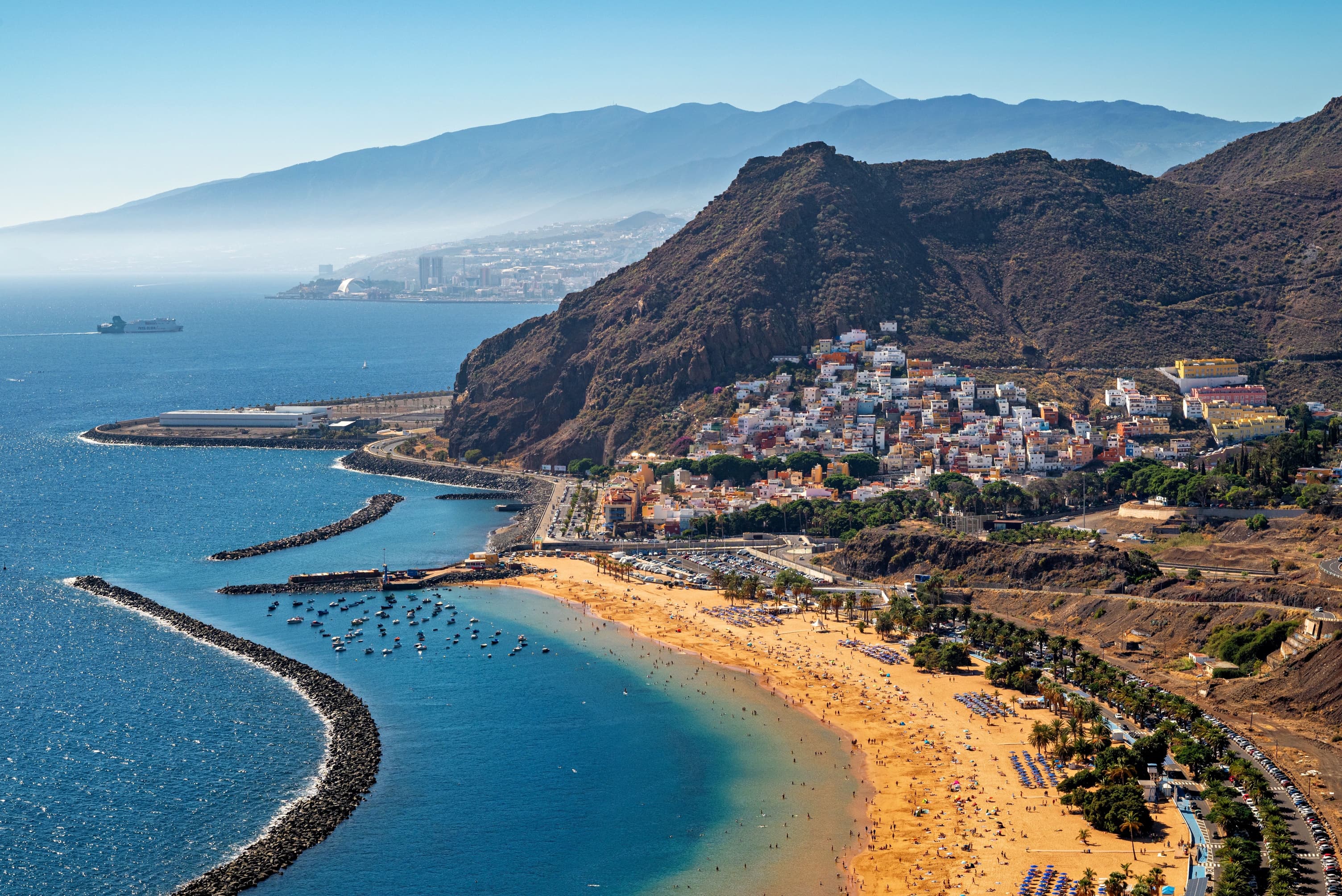
A journey to the Canary Islands, a Spanish archipelago off the coast of Morocco born of volcanic activity still ongoing today: Tenerife, whose Mount Teide rises over three thousand seven hundred metres and remains Spain's highest peak, then La Palma, nicknamed the "beautiful island" and "island of the stars" for hosting one of the largest astronomical observatory complexes in the world, built on its heights thanks to a sky ranked among the purest on the planet.
When
Year-round
Price
From 2 500€ excl. flights
(based on 2 people sharing)
How long
6 nights
Ideal length
Days 1-2
The first chapter unfolds on Tenerife, the largest of the Canary Islands, whose Mount Teide, a volcano still considered active by Spanish monitoring services, rises over three thousand seven hundred metres and remains both Spain's highest peak and the world's third-largest volcanic structure measured from its underwater base. The UNESCO-listed national park surrounding it presents a lunar landscape of petrified lava flows so singular it has served as a backdrop for several science-fiction films.
Day 1
The Teide cable car
A cable car ascent to near the summit of Teide, an exceptional panorama over the Canary archipelago and the lunar landscape of frozen lava flows in the national park.

Day 2
The Los Roques de García volcanic formations
A hike among the rock formations of Los Roques de García, sculpted by volcanic erosion, before a sunset over the sea of clouds that regularly forms below the park.


Days 3-4
A crossing to La Palma, the north-westernmost volcanic island of the archipelago, nicknamed the "island of stars" for hosting on the heights of Roque de los Muchachos one of the largest astronomical observatory complexes in the world, built there thanks to a sky ranked among the purest on the planet and protected since 1988 by a local law strictly limiting light pollution. The entire island was also declared a UNESCO biosphere reserve in 2002 for the diversity of its volcanic ecosystems.
Day 3
The Roque de los Muchachos observatories
A visit to the Roque de los Muchachos astronomical observatory complex, over two thousand four hundred metres up, one of the best-equipped observation sites in the world.

Day 4
A night observation under one of the world's purest skies
A night outing guided by an astronomer to observe the Milky Way under one of the purest skies in the world, protected by a local law strictly limiting light pollution since 1988.



Other trips built in the same spirit — more to draw inspiration from.
 6 nights
Spain: Barcelona, Seville & Granada
From Gaudí to the Moorish courtyards of the Alhambra
Explore Trip 4 nights
Spain: The Basque Country, San Sebastián
The city with the most Michelin stars per capita in the world, around a shell-shaped bay
Explore Trip 8 nights
A Journey into Greece: Athens, Sifnos, Paros & Santorini
From Athens to the islands, a journey in four stops
Explore Trip 5 nights
Budapest, Buda to Pest
Turn-of-the-century thermal baths, straddling the Danube between Buda and Pest
Explore Trip 5 nights
Brussels to Bruges
Brussels' gilded Grand-Place and the medieval canals of Bruges
Explore Trip 6 nights
Paphos to Troodos
Roman mosaics and Byzantine monasteries clinging to the Troodos
Explore Trip Custom trips
Create your own itinerary
Our Travel Experts will help you create a completely bespoke itinerary. Just tell us what you want. We'll make it happen.
Create trip